A good booking system for yoga classes does more than collect registrations. It makes your studio, workshops or training programs feel more professional, reduces back-and-forth questions and shows you at any time who has booked, paid or is still on the waiting list.
Contents
- 1. Why yoga classes have specific requirements for a booking system
- 2. Your participants should be able to book online directly
- 3. Waiting lists need to work simply
- 4. Custom registration fields matter more than they seem at first
- 5. Payments and invoices should not run on the side
- 6. The booking process should match your brand
- 7. You need an overview of participants, not just bookings
- 8. Email communication should be possible from inside the system
- 9. The system should grow with your offering
- 10. Checklist: What a booking system for yoga classes should support
- 11. Who benefits most from a dedicated booking system?
- 12. How marble booking supports yoga offerings
- 13. Conclusion
Context
Why yoga classes have specific requirements for a booking system
Yoga offerings are rarely just simple appointments. Many studios and teachers manage recurring classes, workshops, retreat days, prevention courses, waiting lists, different levels, limited spots, deposits or complete training programs across several modules.
That is why a generic contact form usually does not last long. Once your offering grows, you need a booking flow that guides participants and removes work in the background.
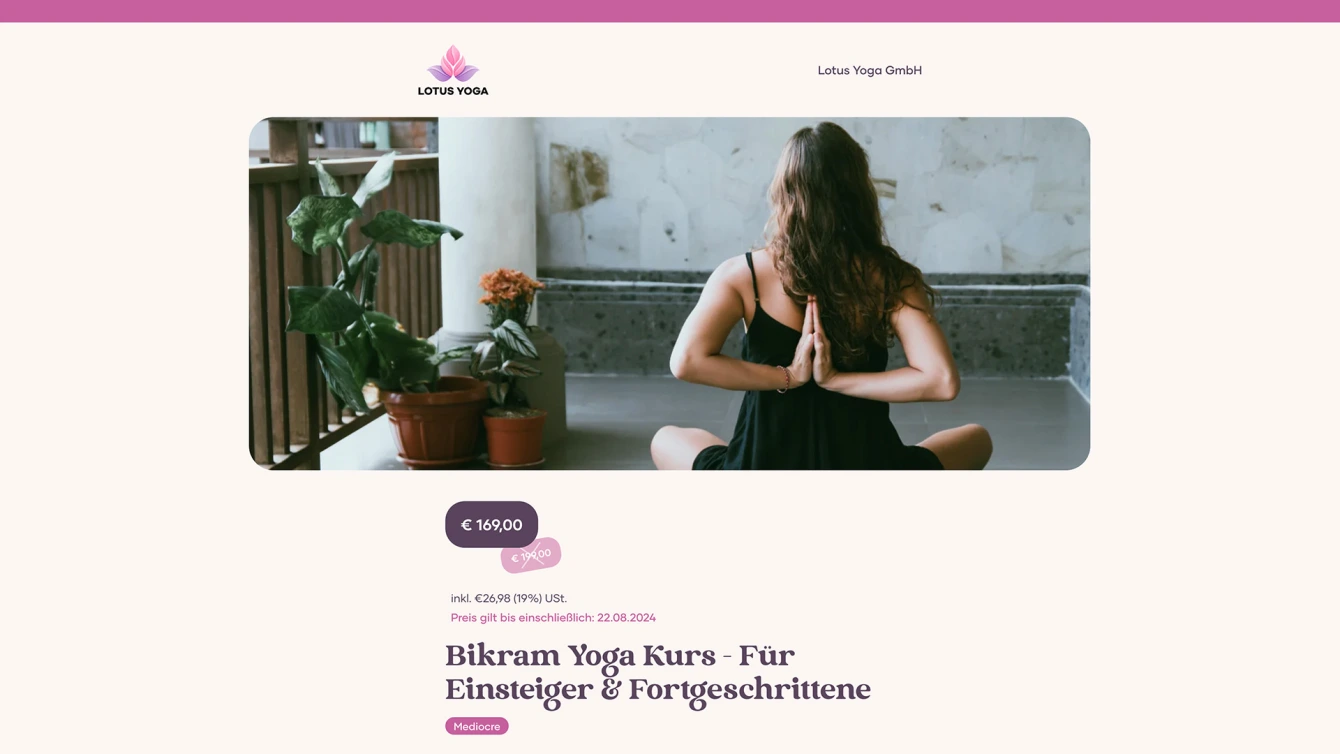
Online booking
Your participants should be able to book online directly
The most important point: interested people should not have to ask first whether a spot is still available. A good booking page clearly shows which offer can be booked, when it takes place, how many spots are available and what participation costs.
This reduces questions and makes the next step easier. Especially for yoga classes, workshops and trainings, this clarity matters because many bookings happen outside traditional office hours.
Fully booked classes
Waiting lists need to work simply
Many yoga offerings have limited spots. When a class is fully booked, demand should not get lost. A waiting list helps you make demand visible and fill available spots clearly.
The waiting list itself is only part of the picture. You also need the overview: who is waiting, who has been informed and who moved up? Without a system, this quickly turns into a messaging puzzle.
Registration
Custom registration fields matter more than they seem at first
For an open class, name and email may be enough. For workshops, retreats or yoga trainings, you often need more information: experience level, health notes, billing address, preferred payment method, module selection or consent to terms.
A good booking system for yoga should therefore support custom fields. That way you ask for exactly what you need for each offer.
Payments
Payments and invoices should not run on the side
When payments are spread across individual PayPal links, bank transfers, notes and manual invoices, unnecessary work appears. At the latest with workshops, trainings or higher participation fees, this becomes hard to manage.
Make sure your booking system shows payment statuses, can integrate online payments and handles invoices clearly in the process. This does not only save time. It also feels more professional for your participants.
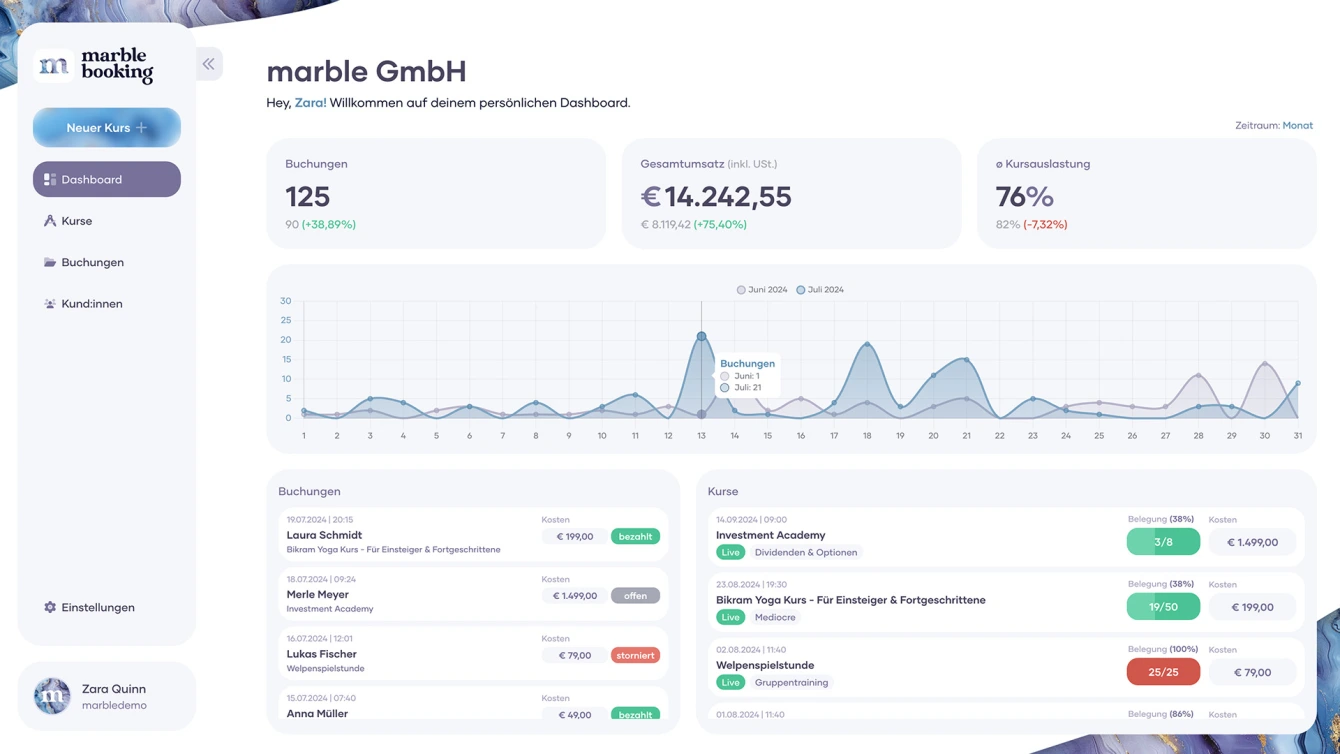
Brand and trust
The booking process should match your brand
Yoga is built on trust. The first digital contact should therefore not feel like unrelated third-party software. Colors, logo, fonts, language and email communication should match your studio or personal brand.
This is not design luxury. It affects whether the booking process feels calm, coherent and trustworthy.
Participants
You need an overview of participants, not just bookings
Individual bookings are only one part of the process. It becomes much more useful when you can see which person booked which offers, what data is stored, which invoices are open and which communication has already happened.
Especially for studios, training providers and recurring class formats, good participant management is a real advantage.
Communication
Email communication should be possible from inside the system
Before a class starts, you may want to send practical notes. For workshops, you may need reminders, material lists or final organizational information. For trainings, multiple modules and repeated communication are common.
If you can contact participants directly from the booking system, you do not have to export lists or manually assemble recipient groups.
Scaling
The system should grow with your offering
Today you may start with three classes. Later, workshops, retreats, online offers, trainings or collaborations may follow. A good booking system should support this development without forcing you to switch again after a few months.
So do not only look at your current needs. Look at the next 12 to 24 months.
Quick overview
Checklist: What a booking system for yoga classes should support
- Online booking pages for classes, workshops and trainings
- limited spots and waiting lists
- custom registration fields per offer
- payment overview and online payments
- automatic or supported invoice creation
- participant management
- email communication to bookers or groups
- adaptation to your design
- embedding or linking from website, Instagram, newsletter or direct links
- no additional booking commissions
Fit
Who benefits most from a dedicated booking system?
A booking system is especially useful when you sell offers regularly and organization should no longer happen on the side. Typical cases are:
yoga studios with multiple classes per week
yoga teachers with workshops or class series
providers of yoga trainings
retreat and weekend formats
Pilates, dance or movement offers with a similar structure
For single free sessions, a form may be enough. Once spots, payments, invoices, waiting lists or recurring participants are involved, a real booking system becomes much more useful.
marble booking
How marble booking supports yoga offerings
marble booking for yoga studios and yoga classes combines booking pages, participant lists, waiting lists, payments, invoices and email communication in one system. You can make offers bookable online, collect individual information and adapt the booking process to your own design.
The advantage: you do not have to piece your organization together from forms, messenger messages, spreadsheets and manual invoices. Your bookings come together in one place — visible for you and clear for your participants.
Conclusion
Conclusion
The best booking system for yoga classes is not automatically the one with the longest feature list. What matters is whether it fits your offering, guides participants well through the booking and actually removes work from your everyday routine.
If you offer classes, workshops or trainings, pay special attention to waiting lists, custom registration fields, payment overview, invoices, participant management and design adaptation. These points decide whether your system really supports you — or simply becomes another tool.
Want to see what this could look like for your yoga offering?
Request a non-binding demo of marble booking. We will show you how your classes, workshops or trainings can become bookable online — matching your workflow and your design.